
Book Review: Millions, Billions, Zillions
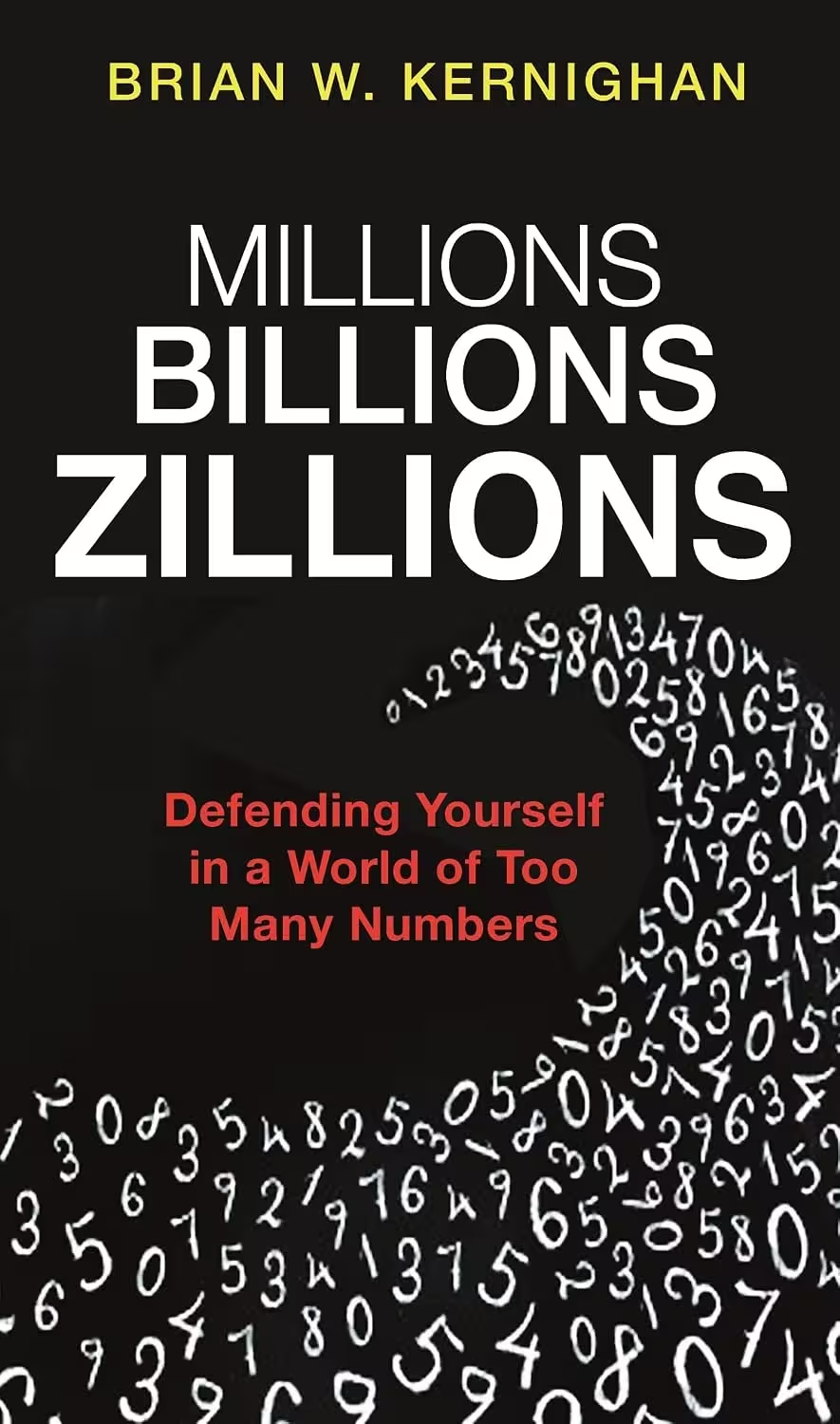
We are surrounded by numbers, which are often hard to make sense of.
“Millions, Billions, Zillions” from Brian W. Kernighan helps to navigate through huge numbers and estimate them. (Yes, that Kernighan from K&R, the co-author of “The C Programming Language” and famous {} bracing style in C-style programming languages.)
The book navigates big numbers and confusion between millions and billions, various units and sometimes erroneous or over-precise conversions between them, dimensions and relations between length, area, and volume. It touches various biases, broken graphs, and other ways to lie with statistics. And finally provides useful tips to do math quickly and make educated guesses.
It is overall a great overview and makes one pay more attention to the numbers others say. And I learned a thing or two from it too.
Little’s Law
It says that at any point in time, the amount of work in a system equals its arrival rate multiplied by the time each item spends moving through it. In other words what comes in, goes out and we can estimate the number of items at any given equal stage as proportional.
The Rule of 72
It is a simplified formula (Years to double = 72 / Expected rate of return) used to estimate the number of years required to double invested money at a given annual rate of return. Alternatively, it can compute the annual rate of compounded return from an investment, given how many years it will take to double the investment.
However, at moments the book reads more like a collection of fun facts.
It is also formatted with old-school technologies, such as groff.
Which may have impressed me ten or twenty years ago, but nowadays there are much better ways to publish a book.
★★★☆☆ Short and useful.
Subscribe to all blog posts via RSS